
Now Playing: A MAN CALLED SLOANE
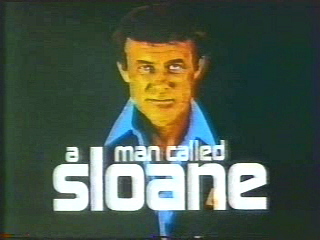
When NBC lured ABC president Fred Silverman over to take over their third-place (out of three, at the time) network, it expected big things. After all, in his three years at ABC, he made the Alphabet network a money-making machine, launching shows like STARSKY & HUTCH, THE LOVE BOAT, FANTASY ISLAND, LAVERNE & SHIRLEY, THREE’S COMPANY, ROOTS and CHARLIE’S ANGELS.
Magic didn’t strike twice, as Silverman’s Midas touch turned to stone. Some of the programs developed by NBC during his reign from 1978 to 1981 rank among television’s most notorious flops. TV buffs know well what a laughing stock NBC became while pushing shows like HELLO, LARRY, SUPERTRAIN, THE MISADVENTURES OF SHERIFF LOBO, B.J. AND THE BEAR and C.P.O. SHARKEY onto the television audience. NBC’s few hits were in late-night, where THE TONIGHT SHOW and SATURDAY NIGHT LIVE, which ripped Silverman a new one in an Al Franken-written sketch called “Limo for a Lamo”, in which John Belushi portrayed Silverman, were the network’s main source of advertising income.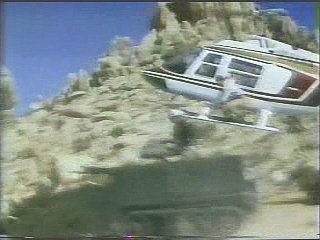 Another Silverman-bred series that didn’t work was A MAN CALLED SLOANE, which was originally created by writer Cliff Gould (THE STREETS OF SAN FRANCISCO) as a light spy adventure like the James Bond movies. The original pilot, titled T.R. SLOANE, starred Robert Logan (77 SUNSET STRIP) as Thomas Remington Sloane, an agent of UNIT battling a megalomaniac who plans to cause havoc with a massive death ray. The villain’s henchman was Torque (Ji-Tu Cumbuka), a 6’5” bald, black man with a mechanical hand who was clearly modeled after Richard Kiel’s Jaws character in THE SPY WHO LOVED ME.
NBC liked the idea and the Torque character, but not Logan, sending Gould and executive producer Philip Saltzman on a hunt for a new leading man. Silverman suggested Robert Conrad, one of television’s all-time most popular stars, who had hit it big in the 1950’s on HAWAIIAN EYE and in the ‘60s on THE WILD WILD WEST. Conrad was ubiquitous during the 1970’s, starring in several shortlived adventure series like THE D.A., ASSIGNMENT: VIENNA and BAA BAA BLACK SHEEP, as well as a ton of TV-movies and pilots. Saltzman reportedly argued that Conrad couldn’t possibly do A MAN CALLED SLOANE, because he was already starring as an ex-boxer in the NBC series THE DUKE. “No problem,” replied Silverman, “I’ll just cancel THE DUKE.” He did, and Conrad became Thomas Remington Sloane.
A MAN CALLED SLOANE was the first television series produced by Quinn Martin Productions after Martin sold his company to Taft Broadcasting. Martin was one of television’s great producers, shepherding successful shows like THE UNTOUCHABLES, THE FUGITIVE, THE F.B.I., BARNABY JONES and THE STREETS OF SAN FRANCISCO. Part of Martin’s deal with Taft, however, was that he had to relinquish hands-on involvement with QM shows, and SLOANE likely suffered as a result of his absence.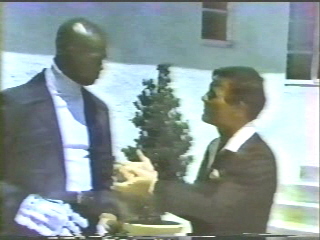 Thomas Sloane worked for a government agency called UNIT, which was based out of the back room of a Los Angeles toy store. There he and Torque, now a UNIT agent and Sloane’s sidekick, took orders from The Director (Dan O’Herlihy, held over from the unaired pilot movie) and used gadgetry designed by cute lab assistant Kelly (Karen Purcill). They also received constant field information and advice from “Effie”, a talking computer with the voice of Michele Carey (Elvis’ leading lady in LIVE A LITTLE, LOVE A LITTLE).
Like Conrad’s previous series, THE WILD WILD WEST, Sloane tackled a wide range of kinky baddies, including Roddy McDowall as a terrorist with a robot army, Robert Culp as a cosmetics entrepreneur plotting to take over the world by sending out gorgeous models to murder prominent men with their “kisses of death”, Richard Lynch as a master of disguise and Dennis Cole as a 100-year-old Nazi meddling with cloning. Nearly every episode featured at least one prominent guest star--Eric Braeden, Edie Adams, Monte Markham, Clive Revill (the villain in T.R. SLOANE), Michael Pataki--as well as several sexy women for Conrad to canoodle with. Jo Ann Harris, the striking star of the Quinn Martin series MOST WANTED, appeared in the final episode, “The Shangri-La Syndrome”, which was directed by Conrad and is probably SLOANE’s weakest hour.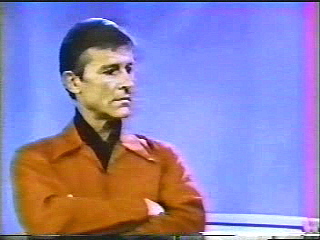 It was all pretty silly, of course, but definitely watchable. Conrad’s physicality led to plenty of nifty stunts, chases and fights, and QM spared few expenses in whittling together colorful if cliched plots, sets, guest stars and location shootings. The camera loved Cumbuka, who purportedly didn’t get along with Conrad, but was certainly a striking figure blessed with the neat gimmick of a steel hand that could wield various tools and weapons like a radio transmitter, laser, saw, drill or screwdriver. Some felt Conrad, a rugged man of action, was miscast as a suave secret agent, but I think he’s just fine and has pretty good rapport with Cumbuka.
A MAN CALLED SLOANE began the 1979 fall season with decent ratings, knocking CBS’ PARIS, a Steven Bochco cop show starring James Earl Jones, off the air and spurring ABC to shift HART TO HART to another night. But when ABC shifted FANTASY ISLAND from Friday to anchor its hit Saturday lineup, which included THE LOVE BOAT, SLOANE’s number was up. NBC cancelled the series after just twelve episodes. Conrad continued to star regularly in TV-movies throughout the 1980’s, although he may be as quickly remembered today for his notorious temper tantrum on the first BATTLE OF THE NETWORK STARS, which led to him getting smoked in a 100-yard dash by none other than Gabriel Kaplan!
By the way, NBC eventually dusted off that T.R. SLOANE pilot and aired it in 1981, more than a year after A MAN CALLED SLOANE’s cancellation, as DEATH RAY 2000. This young 13-year-old couldn’t have been the only viewer that night who was confused to see Robert Logan in Conrad’s old role opposite Dan O’Herlihy…and Torque as the heavy!

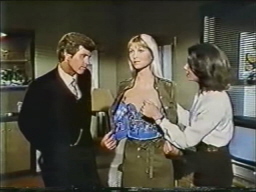 BEYOND WESTWORLD’s pilot opens mere hours after the climax of WESTWORLD. Even though the events of FUTUREWORLD are ignored in the series, its premise of a madman using the robots as doubles in an effort to rule the world was recycled by series creator and executive producer Lou Shaw (QUINCY, M.E.). In “Westworld Destroyed”, the Delos Corporation, the conglomerate that built Westworld, calls in its security chief, John Moore (Jim McMullan), to investigate the mechanical catastrophe with the gunfighter and other robots that led to several deaths. McMullan was a reasonably familiar TV leading man who had starred as a helicopter cop with Dirk Benedict in the shortlived 1974 series CHOPPER ONE.
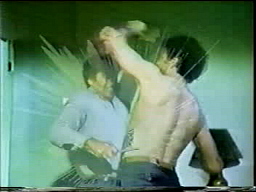 This scene illustrates one of BEYOND WESTWORLD’s biggest flaws: the robots are too easy to kill. Director Ted Post does a pretty nice job with the scene, which is set in an isolated desert cabin where Quaid has taken the captured Moore to find out how much he knows about Quaid’s operation. He leaves Moore alone with the mechanical reptile, which is loaded with venom and is many times stronger and faster than a real snake. Moore manages to dodge it a few times, but one strike is so forceful that it smashes partially through the cabin wall, where Moore is able to grab it and shove it into a light bulb socket, causing the robot snake to electrocute itself. Even though the robots are supposed to be much stronger and heavier than humans, Moore routinely beats them up and pushes them off great heights.
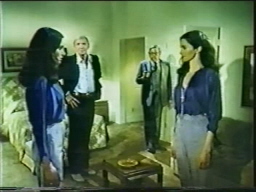 With STAR TREK alumni Fred Freiberger and John Meredyth Lucas wearing producer hats on BEYOND WESTWORLD, you might expect it to live up to that SF classic, but it never does. Thankfully, it does boast CBS’ typically high production values with plenty of location shooting, sharp cinematography, decent special effects and guest stars from TV’s A-list. Actors appearing in the five shows include Denny Miller, Christopher Connelly, Jack Carter, Rene Auberjonois, Ronee Blakely, Monte Markham, Hari Rhodes, Judy Pace, Martin Kove, Julie Sommars, Christine Belford, Michael Pataki, Robert Alda, George Takei and Michael Cole. That’s a helluva lot of talent for a television series with scripts that weren’t up to the level of its actors. In just the second episode, Shaw and director Rod Holcomb had Sellecca both dressed as a cheerleader and meeting her evil robot twin, two tried-and-true TV cliches. “Sound of Terror”, the last to air, found Moore and Pamela digging into which member of a hit rock band (which, of course, sounded lousy) was a robot double planning to blow up a nuclear power plant. “The Lion” put Moore behind the wheel of a racecar after his NASCAR legend buddy (THE MOD SQUAD’s Michael Cole) became paralyzed in a crash caused by one of Quaid’s robots. The formula was already getting stale by the fifth show, “Takeover”, which starred Monte Markham as a police lieutenant who is given a robot chip during a cranial operation and is brainwashed into becoming an assassin for Quaid.
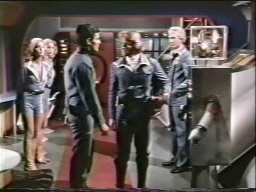 There can be little doubt that QUARK never would have become a series if not for STAR WARS’ unprecedented box-office success. Science fiction had long been regarded as a dead genre; there had been few successful SF film or television projects in many years, as hard as it may be to believe today. But after the summer of ‘77, sci-fi was everywhere--major studio blockbusters, low-budget independents, even TV shows. BATTLESTAR GALACTICA, which debuted on ABC in the fall of 1978, was the most obvious TV benefactor of STAR WARS’ success, but QUARK got there first.
 The pilot that aired in 1977 really isn’t very good. It’s less spoofy and less manic than the series that followed, despite its Buck Henry teleplay. Henry appears to have not been involved in the series, which received much acclaim from critics who adored its mixture of slapstick and wit, but few viewers in its Friday night timeslot just before C.P.O. SHARKEY, a mildly successful sitcom starring Don Rickles as a Chief Petty Officer in the U.S. Navy. The writing staff obviously boned up on STAR TREK reruns, drawing many of their plots from that ‘60s series. In “The Old and the Beautiful”, Quark is stricken with a disease that prematurely ages him, much as the U.S.S. Enterprise crew did in the TREK episode “The Deadly Years”. TREK’s “Shore Leave” inspired “Goodbye, Palombus” (a spoof of Benjamin’s movie GOODBYE, COLUMBUS), where Quark and his crew investigate a paradise planet where whatever you wish for comes true.
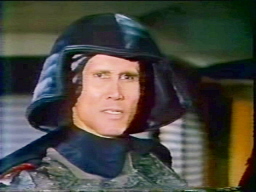 The best episode is the first shot and aired after the pilot, “May the Source Be With You”. It ran one hour and managed to pack a bit of adventure into its comedy package. The universe is threatened by an evil race known as the Gorgon, and only Quark and his intergalactic garbagemen can stop them. Quark’s secret weapon is “The Source”, an omnipotent force with the voice of Hans Conried that imbues him with mysterious powers. The problem is that the Source only works if Quark fully believes in it, but the Source’s absentmindedness and bumbling doesn’t inspire a lot of confidence. The Head Gorgon was portrayed by the great Henry Silva, a charismatic actor who played hundreds of heavies in Hollywood, but I don’t recall him ever appearing in another sitcom. Projecting a perfect note of comic menace, Silva threatens the galaxy’s safety while wearing a silly helmet that may have gotten him the gig a year later as Killer Kane, Princess Ardala’s sinister chief of staff in BUCK ROGERS IN THE 25TH CENTURY. “May the Source Be With You”, directed by veteran Hy Averback from a clever teleplay by Bruce Zacharias (REVENGE OF THE NERDS), is full of funny quips and nifty sight gags, like the scene in which a blinded Quark must rely on the Source’s guidance to rescue Ficus from a pair of Gorgon torturers.
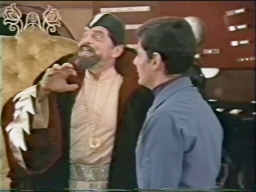 Another good episode is “All the Emperor’s Quasi-Norms”, a two-parter in which Ross Martin (THE WILD WILD WEST) guest-stars as Zargon the Malevolent, another evil dictator searching for a super-weapon with which to destroy the galaxy. His beautiful daughter (a pre-KNOTS LANDING Joan Van Ark) falls for Ficus, who schools her in an alien method of lovemaking (“Beebeebeebeeebeeeeebeeeee…”), and Gene and Andy disguise themselves as scientific lecturers.
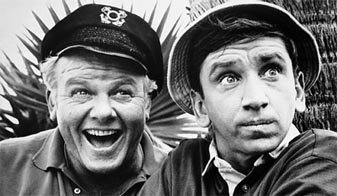 Bob Denver passed away this week at the age of 70. He had been in poor health for awhile. He underwent quadruple heart bypass surgery earlier this year, and finally succumbed to cancer near his West Virginia home with his wife and children by his side.